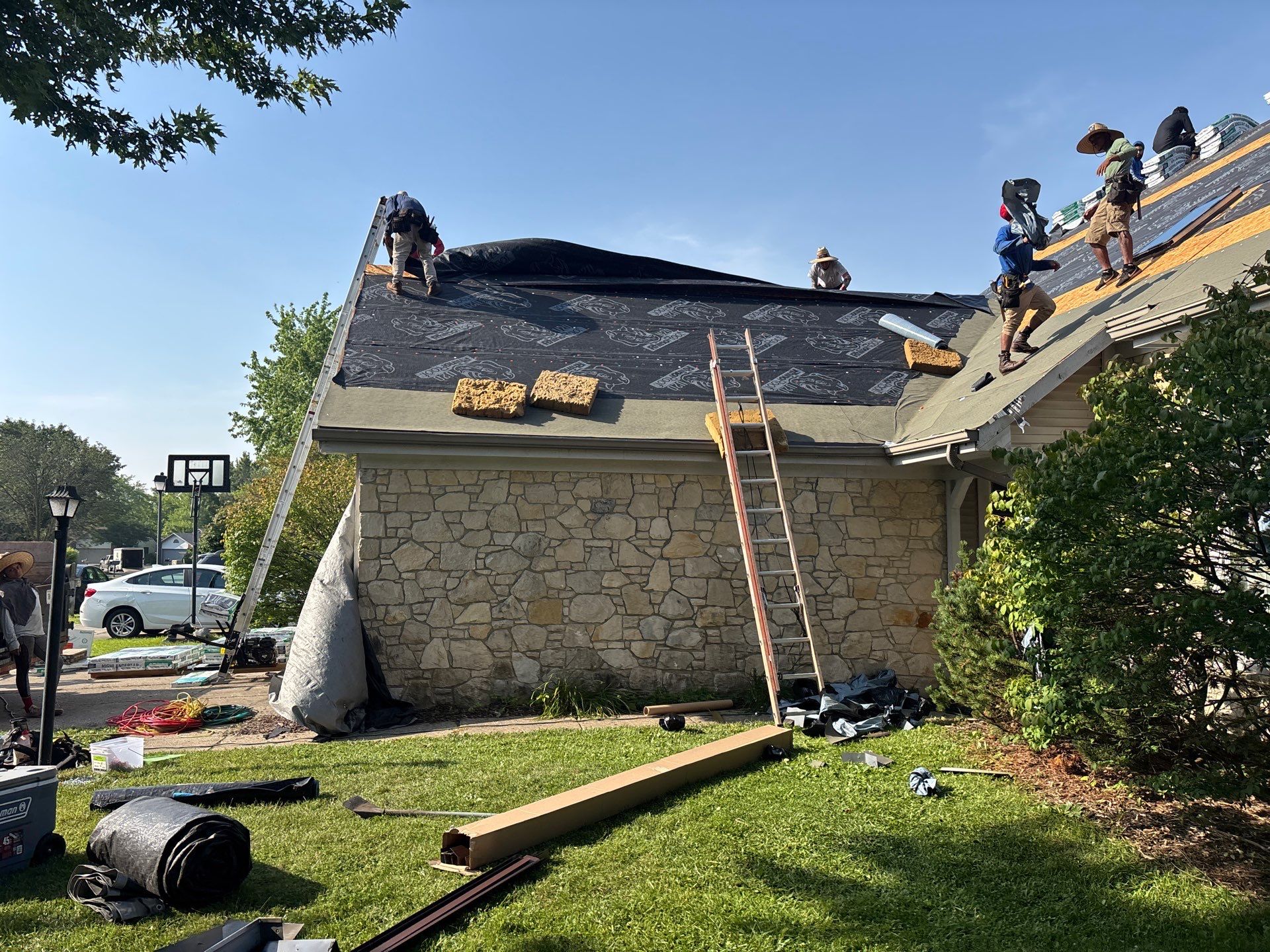
Problem: You Have a Leak in the Middle of Winter
You have a roof leak and it is the middle of winter. The fix is to treat it as urgent and have it addressed promptly, since an active leak cannot reasonably wait months for spring. Winter roof repair is feasible, so a professional can address the leak in the cold, using proper technique. For a Pheasant Run homeowner, a winter leak risks water damage that worsens the longer it goes, so deferring it is not wise. If conditions are severe, a temporary measure can protect the area until a full repair is possible. The cold does not make repair impossible, only more careful. Contacting a professional to address a winter leak promptly is the right move, since the alternative, letting water into your home all winter, causes far more damage than the repair.
Problem: Shingles Blew Off in a Winter Storm
A winter storm blew shingles off your roof. The fix is prompt repair, since missing shingles expose the roof to leaks and the exposure cannot safely wait through winter. A professional can replace the missing shingles in the cold, handling the brittle materials carefully and hand sealing them to secure them despite the cold. For a Pheasant Run homeowner, this is an urgent winter problem, since the exposed area is vulnerable to the season's snow, ice, and moisture. If conditions do not yet allow a full repair, temporary protection can shield the area in the interim. Winter does not prevent the repair, it just requires proper cold weather technique. Having the missing shingles replaced promptly by a professional protects the exposed roof through the rest of winter rather than leaving it open to water.
Problem: You Are Concerned About Roof Safety
You are concerned about the safety of roof work in winter. The fix is to leave it to professionals, who have the equipment and experience to work safely on snowy, icy, cold roofs. The added hazards of winter, slippery surfaces, poor footing, and cold, make do it yourself roof work especially dangerous. For a Pheasant Run homeowner, this concern is well founded, and the answer is to not attempt winter roof repair yourself, since the risk of a serious fall is real. Professionals take proper safety measures and clear snow and ice before working. Your safety concern is a good reason to rely on qualified help rather than climbing onto a winter roof. Understanding that professionals are equipped to handle the safety challenges of winter roofing should reassure you that the work can be done safely, by the right people.
Problem: There Is Snow or Ice on Your Roof
There is snow or ice on your roof and you need a repair. The fix is to have the snow and ice cleared from the work area first, which a professional can do safely before repairing. Snow and ice generally must be removed so the roofer can access and work on a clear surface, and improper removal can damage shingles, so it requires care. For a Pheasant Run homeowner, this is a normal part of winter repair, handled by the professional. The snow and ice also make the roof slippery, raising the safety stakes and reinforcing that this is not do it yourself work. Once the area is cleared safely, the actual repair can proceed. Understanding that snow and ice removal comes first, and is best done professionally, sets expectations for how a winter repair on a snow covered roof works.
Problem: You Are Not Sure It Can Wait
You are unsure whether your roof problem can wait until spring. The fix is to assess the urgency: if the roof is actively leaking, exposed by missing shingles, or storm damaged, it should be addressed promptly even in winter, whereas a stable, minor, or cosmetic issue may reasonably wait. For a Pheasant Run homeowner, the deciding factor is whether delaying would allow water damage or worsening. An active or exposed problem cannot safely be postponed for months, while a non urgent matter can be scheduled for milder weather. If you are unsure, a professional assessment can determine the urgency. Understanding how to weigh whether a problem can wait, based on the risk of leaving it, helps you decide between a winter repair and deferring to spring, so you neither rush nor dangerously delay.
Problem: You Have an Ice Dam Causing a Leak
You have an ice dam causing a leak. The fix is to address the ice dam and the leak, which a professional can do by carefully removing the ice and addressing the leak, then looking at the underlying causes. An ice dam forms when uneven roof warming melts snow that refreezes at the eaves, backing water up under the shingles. For a Pheasant Run homeowner, this is a distinctly winter problem that needs attention in the season, since it actively drives water into the home. Careful ice removal and addressing the insulation and ventilation that cause the dam help resolve and prevent it. The leak itself may need repair once the ice is managed. Understanding that ice dams are a fixable winter issue, best handled by a professional, helps you address this cold weather leak properly.
Problem: You Want a Repair Done Right in the Cold
You want a winter repair done properly, not compromised by the cold. The fix is to have it done by an experienced professional who uses proper cold weather technique: handling brittle shingles carefully, hand sealing to secure them, clearing snow and ice safely, and ensuring the repair holds. For a Pheasant Run homeowner, getting it done right in winter depends on this expertise, since the cold introduces challenges that proper technique addresses. A professional experienced in winter work can produce a repair that is just as sound as a warm weather one. The conditions require care, not compromise. Understanding that a quality winter repair is achievable with the right professional should give you confidence that the cold need not mean a lesser result, as long as the work is done by someone who knows how to handle it.
Problem: You Are Worried About Cold and Sealing
You are worried that shingles will not seal properly in the cold. The fix is hand sealing, a standard cold weather technique where the roofer applies roofing adhesive to bond the shingles rather than relying on the sun's warmth, which may not activate the seal until spring. For a Pheasant Run homeowner, this concern is valid but addressable, since a professional secures the shingles by hand sealing during a winter repair, so they are not left vulnerable to wind. The sealing issue is well understood and handled with proper technique. Your concern is exactly why having the work done by an experienced roofer matters, since they take this step. Understanding that hand sealing resolves the cold weather sealing challenge should reassure you that a winter repair can secure shingles just as effectively as a warm weather one.
Problem: You Want to Avoid Winter Roof Damage
You want to avoid roof problems during winter. The fix is preparation and maintenance before and during the season: having the roof inspected and any weaknesses addressed before winter, ensuring proper attic insulation and ventilation to prevent ice dams, and keeping up with issues as they arise. For a Pheasant Run homeowner, proactive care reduces the chance of winter leaks and damage, since many winter problems, like ice dams, stem from conditions that can be addressed in advance. Preparing the roof before the cold arrives is far better than reacting to a winter failure. While no roof is immune to a severe enough winter, good preparation makes it more resilient. Understanding that winter roof damage can be largely prevented through preparation and maintenance helps you protect your home before the season's conditions test the roof.
Problem: A Full Replacement Is Needed but It Is Winter
You need a full roof replacement but it is winter. The fix depends on urgency: if the roof is failing and the situation is urgent, replacement can be done in winter with proper technique, while if the roof can safely last until milder weather, scheduling the replacement for spring may be preferable. For a Pheasant Run homeowner, a full replacement is feasible in winter but is a larger undertaking where conditions matter more, so the timing decision weighs urgency against the easier conditions of warmer weather. A professional can advise whether your roof needs replacing now or can wait. If it can wait safely, spring may be ideal, but if not, winter replacement is possible. Understanding that replacement can be done in winter when necessary, but may be better deferred when not urgent, helps you decide on timing.
Problem: You Want It Handled Properly
You simply want your winter roof problem handled properly. The fix is to have it assessed and repaired by a professional experienced in cold weather work, who can determine the urgency, use proper technique, and either repair now or advise waiting as appropriate. For a Pheasant Run homeowner, proper handling in winter depends on this expertise, since the season's challenges, brittle shingles, sealing, snow and ice, and safety, are best managed by someone who knows them. A professional ensures the problem is addressed correctly and safely, whether that means a prompt repair, a temporary measure, or sensible deferral. Pheasant Run Roofing repairs roofs for Pheasant Run homeowners through winter, with the experience to handle cold weather conditions. Call (765) 978-3528 when a winter roof problem needs attention, and we will help you handle it properly.
Problem: You Do Not Know Whether to Repair or Wait
You cannot decide whether to repair now or wait for spring. The fix is to base the decision on urgency and risk, ideally with a professional assessment. If the roof is actively failing, leaking, or exposed, repair now, since waiting risks water damage. If the issue is stable, minor, or cosmetic, waiting for milder weather may be sensible. For a Pheasant Run homeowner, this judgment determines whether a winter repair is warranted, and a professional can help you make it by evaluating the problem and its risk. The goal is to neither postpone an urgent fix dangerously nor rush non urgent work into harsh conditions. Understanding the framework, urgent problems now, non urgent ones potentially later, gives you a clear basis for deciding, and professional input removes the guesswork when the right call is not obvious.